

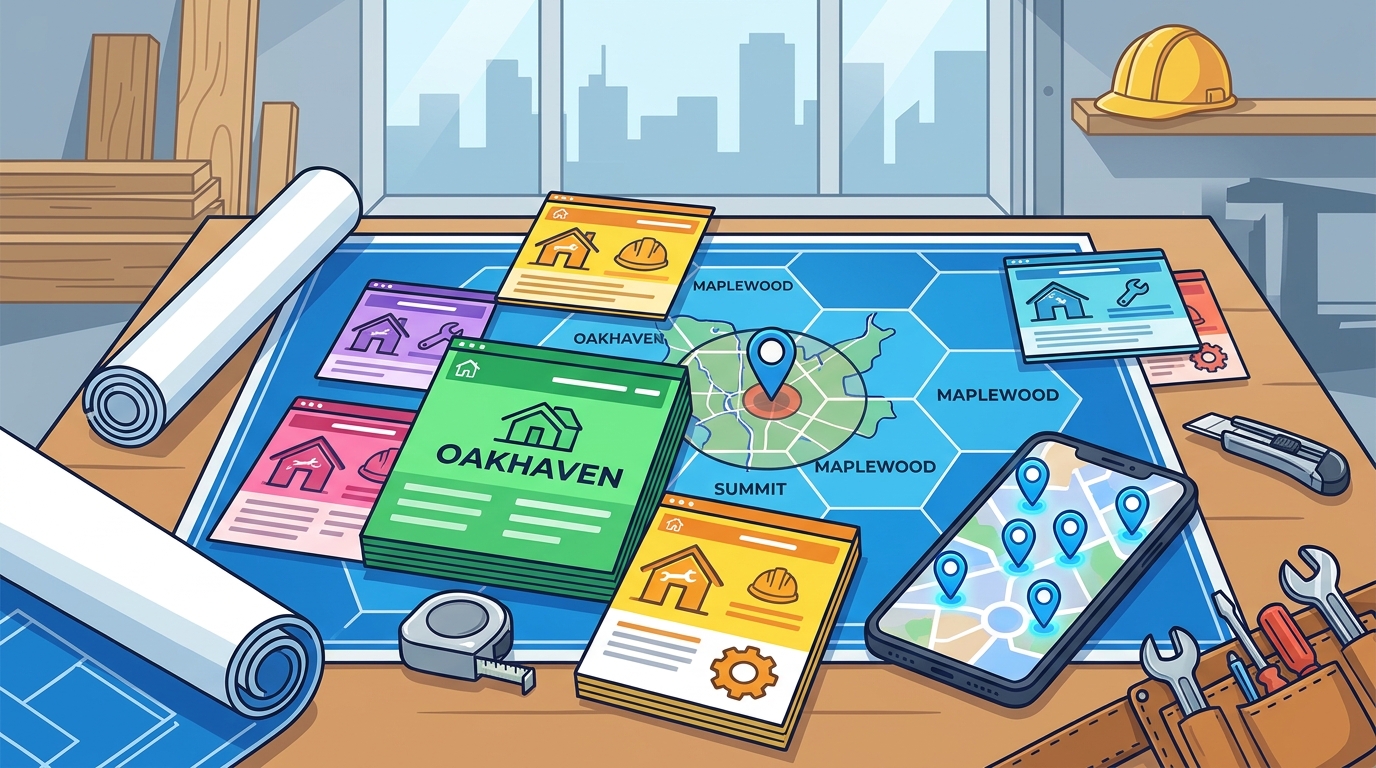
Service area pages are dedicated landing pages targeting specific geographic zones, and they generally outperform generic local SEO tactics for contractors because they capture high-intent search traffic from surrounding towns. While Google Business Profile optimization is essential for the map pack, it only covers a limited radius. By building specific pages for every town you serve, you expand your digital footprint and capture customers who are searching for services in areas outside your immediate physical location.
The Limitations of Google Business Profile Optimization
Many contractors believe that optimizing their Google Business Profile (GBP) is the only local SEO strategy they need. This is a common misconception. A GBP listing is powerful for the local 3-pack, but it is geographically constrained. It typically only shows users within a 10 to 20 mile radius of your physical business address. If you are a roofer or HVAC technician serving a 50-mile radius, your GBP alone will not capture the majority of your potential market.
Service area pages solve this geographic bottleneck. They allow you to rank in the organic search results for specific towns and cities. For example, a plumber in Richmond, Virginia, can create a dedicated page for "Plumbing in Petersburg" and another for "Plumbing in Colonial Heights." This approach ensures that when a homeowner in Petersburg searches for a plumber, your specific page appears in the organic results, not just the map pack. This dual presence significantly increases your visibility and click-through rate.
Service Area Pages vs. Generic Service Pages
Another common strategy is creating a single, generic service page, such as "Our Plumbing Services." While this page is useful for explaining your capabilities, it lacks local intent. Search engines struggle to associate a generic page with a specific location. In contrast, a service area page combines the service and the location into a single, highly targeted URL. This structure signals to search engines exactly where you operate and what you do.
The evidence for this strategy is clear in search behavior data. Users searching for local services often include the city or town name in their query. By matching your page title and content to these specific queries, you improve your relevance score. For instance, a page titled "Emergency Roofing in Chesterfield" is far more likely to rank for that specific intent than a generic "Roofing Services" page. This precision helps you capture high-value leads who are ready to hire, rather than just browsing for information.
The Role of Local Citations and Reviews
Local citations and review management are foundational local SEO strategies, but they are not a substitute for on-page content. Citations help establish your business's legitimacy and consistency across the web, while reviews build trust with potential customers. However, neither citations nor reviews can rank you for a specific town if you do not have a page targeting that town. They are supporting tactics, not primary ranking factors for geographic expansion.
When you combine service area pages with a strong review strategy, you create a powerful synergy. A service area page for a specific town can feature reviews from customers in that exact town. This local social proof is highly persuasive. For example, if your page for "HVAC in Henrico" displays five-star reviews from Henrico residents, it builds immediate trust with new visitors from that area. This targeted approach is more effective than displaying a generic list of reviews from all over the state.
Technical Implementation and Site Architecture
Implementing service area pages requires careful technical planning to avoid duplicate content issues. Search engines may view multiple pages with similar content as spam if they are not differentiated properly. Each service area page must contain unique, locally relevant content. This includes mentioning local landmarks, specific neighborhoods, and unique challenges in that area. For example, a page for a coastal town might discuss saltwater corrosion, while a page for an inland town might discuss humidity control.
Adstonix engineers these pages using modern frameworks like Next.js 15 to ensure they load instantly on mobile devices. Speed is a critical ranking factor, especially for local searches where users are often on the go. A slow-loading page will lose users to faster competitors, regardless of its content quality. By building fast, custom service area pages, you ensure that your local SEO efforts are not undermined by poor technical performance. This technical foundation is what allows your content to rank and convert effectively.
Key Takeaways
- Google Business Profile optimization is limited to a small radius and does not cover your entire service area.
- Service area pages allow you to rank in organic search results for specific towns and cities.
- Generic service pages lack the local intent needed to rank for specific geographic queries.
- Combining service area pages with local reviews creates powerful, targeted social proof.
- Each service area page must contain unique, locally relevant content to avoid duplicate content penalties.
- Fast, mobile-optimized pages are essential for converting local search traffic into booked appointments.
Frequently Asked Questions
How many service area pages should a contractor have?
You should have one page for every town or city where you actively provide services. There is no strict limit, but each page must have unique content to be effective.
Do service area pages work for all types of contractors?
Yes, they are effective for any contractor who serves a geographic area larger than their immediate neighborhood, such as roofers, HVAC technicians, and plumbers.
What is the difference between a service area page and a location page?
A service area page targets a specific service in a specific location (e.g., "Roofing in Richmond"), while a location page might cover all services in that location (e.g., "Contractors in Richmond").
How long does it take for service area pages to rank?
It typically takes 3 to 6 months for new service area pages to start ranking in local search results, depending on competition and content quality.
Can I use the same content on multiple service area pages?
No, using identical content on multiple pages can lead to duplicate content penalties. Each page must be unique and tailored to the specific location.
Conclusion
Service area pages are a critical component of a comprehensive local SEO strategy for contractors. They extend your reach beyond the limitations of your Google Business Profile and capture high-intent search traffic from surrounding towns. By combining these pages with strong technical performance and local social proof, you can dominate your local market. Adstonix specializes in building these high-converting, fast-loading service area pages for local service businesses. To discuss how we can build your local SEO strategy, contact our team. Learn more: Contact Technical Inquiries Adstonix.