

The easiest way to get a service business website live without hiring a developer is by using a managed website builder. These platforms provide drag-and-drop interfaces, pre-designed templates, and built-in hosting that allow non-technical owners to publish a professional site in days. While these tools offer speed, they often lack the deep local SEO architecture and custom code ownership required for long-term digital dominance. For additional details, review the Small Business Web Automation.
The Drag-and-Drop Illusion
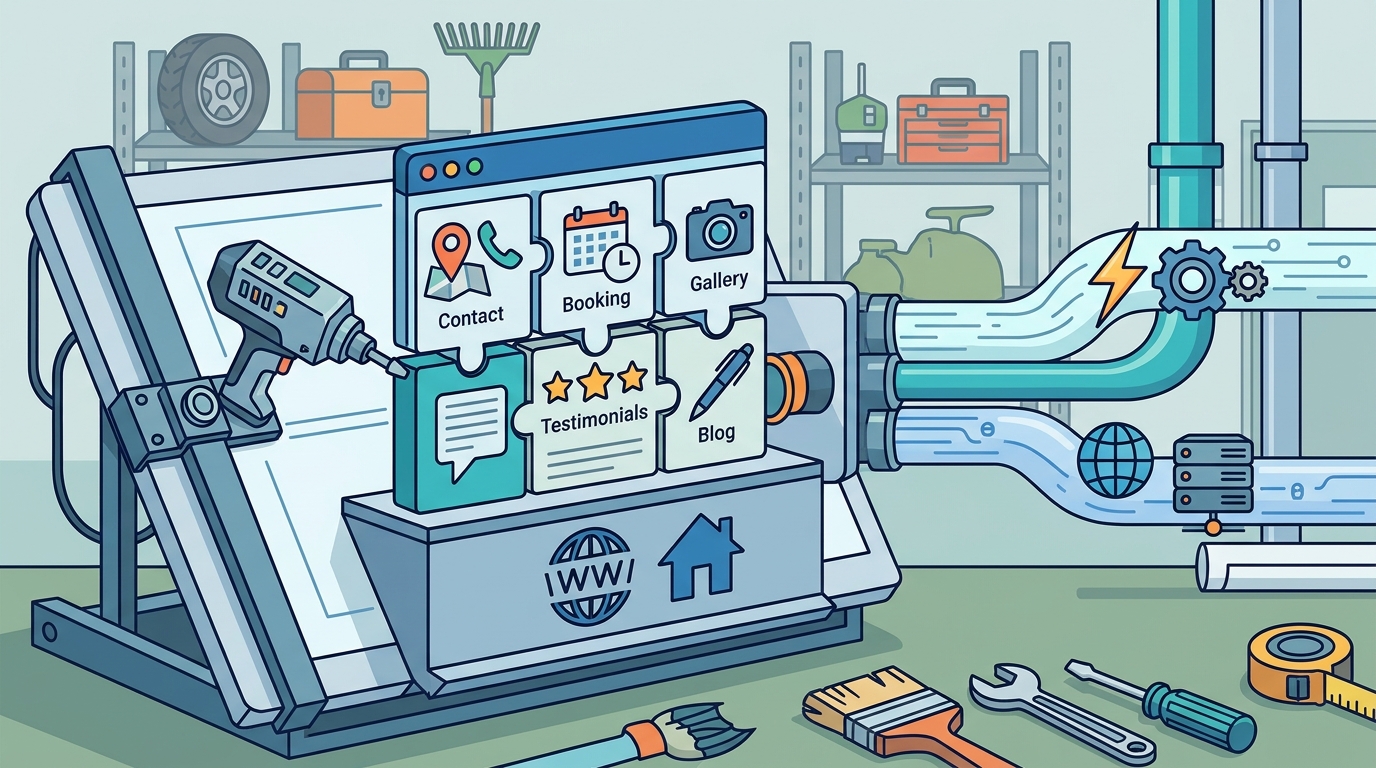
Managed website builders are software platforms that allow users to create websites using visual interfaces rather than writing code. The primary appeal is speed. A contractor or dental practice can select a template, swap images, and publish a site within a weekend. This immediate visibility is valuable for businesses that have no web presence at all. However, the ease of use often masks underlying technical constraints. These platforms typically rely on shared hosting environments and generic content management systems that prioritize simplicity over performance optimization. For a local service business, the initial launch is only the first step. The real challenge is converting that traffic into booked appointments.
Local SEO Limitations
Local search engine optimization is the process of improving a website's visibility in local search results, such as the Google Map pack. Managed builders often struggle with this specific requirement. They frequently use generic URL structures and lack the granular control needed to optimize for specific service areas. A business serving Richmond, Virginia, and the Tri-Cities needs distinct, optimized pages for each location to rank effectively. Generic templates often force a one-size-fits-all structure that dilutes local relevance. Furthermore, page speed is a critical ranking factor. Many managed builders load slowly on mobile devices due to bloated code and unnecessary scripts. Slow loading times directly impact conversion rates, as users are likely to abandon a site that takes more than three seconds to load.
The Ownership Trap
Code ownership is the legal and technical right to access, modify, and migrate a website's source code and assets. With most managed builders, you do not own the code. You rent the platform. If you decide to leave, you often cannot take your website with you. You may be able to export content, but the design, functionality, and underlying structure remain locked within the builder's ecosystem. This creates a dependency that can be costly over time. Monthly subscription fees continue regardless of whether the website is generating leads. For a service business, this lack of control is a significant risk. It limits your ability to implement custom features, such as automated booking systems or AI-driven lead qualification, that require direct access to the codebase.
When to Graduate to Custom Code
Custom web development is the process of building a website from scratch using programming languages like JavaScript and TypeScript, resulting in a fully owned and optimized digital asset. There are clear signs that a managed builder is no longer sufficient. If you are struggling to rank in local searches, if your site loads slowly on mobile, or if you need to integrate complex tools like AI receptionists or custom client portals, it is time to consider a custom build. Adstonix specializes in this transition. We build high-converting websites using Next.js 15, a modern framework that ensures sub-second load times and full code ownership. Our approach eliminates the monthly retainer trap. You pay a one-time investment, and you own the entire repository, domain, and assets. This allows for true scalability and the integration of advanced AI automation that managed builders simply cannot support.
Key Takeaways
- Managed builders are the fastest way to launch a basic website without technical skills.
- They often lack the granular local SEO controls needed to dominate the Google Map pack.
- Page speed on managed platforms is frequently compromised by bloated code and shared hosting.
- You do not own the code in a managed builder, creating a long-term dependency and migration risk.
- Custom development using frameworks like Next.js provides full ownership and superior performance.
- Adstonix offers a transparent, one-time investment model that transfers 100% code ownership to the client.
Frequently Asked Questions
What is the main difference between a managed builder and a custom website?
The main difference is ownership and control. Managed builders provide a rental service where you use their templates and hosting. Custom websites are built specifically for your business, and you own the code, allowing for full modification and migration.
Can I move my website from a managed builder to a custom platform?
You can export your content, such as text and images, but you cannot take the design or functionality. You will need to rebuild the site on the new platform, which is why starting with a custom build or planning for a migration early is important.
Why is page speed important for a service business?
Page speed affects both user experience and search engine rankings. Slow sites lose potential customers who are looking for immediate answers. Google also penalizes slow sites, making them harder to find in search results.
Does Adstonix use managed website builders?
No. Adstonix builds custom websites using Next.js 15. This ensures that the site is fast, secure, and fully owned by the client. We do not use generic templates or shared hosting environments.
How long does it take to build a custom website with Adstonix?
Adstonix typically launches custom websites in 7 to 14 days. This rapid turnaround is achieved through a streamlined engineering process and direct collaboration with the client, eliminating the delays often associated with traditional agencies.
What is the cost of a custom website compared to a managed builder?
Managed builders charge a monthly subscription fee. Adstonix offers a one-time investment model. While the upfront cost may be higher, you avoid ongoing monthly fees and gain full ownership of your digital asset, which is more cost-effective in the long run.
Conclusion
Managed website builders offer a quick start, but they come with significant long-term limitations in SEO, performance, and ownership. For a service business aiming to dominate local search and automate customer interactions, a custom build is the superior choice. Adstonix provides the engineering expertise to build a fast, fully owned website that serves as a true digital asset. To discuss your specific needs and see how a custom build can accelerate your growth, for a free consultation.