

What Should You Know Before Hiring a Web Developer for Your Dental Practice Website?
Before hiring a web developer for your dental practice website, you must verify that they understand healthcare compliance, mobile speed, and local SEO. A dental website is not just a brochure; it is a conversion engine that must load instantly on mobile devices and rank in local search results. Adstonix, a Central Virginia digital studio, emphasizes that slow, template-heavy sites lose patients to competitors who answer the phone and load faster. You need a developer who builds custom, fast sites with full code ownership, not one who locks you into a monthly retainer.
The Critical Role of Mobile Speed in Patient Acquisition
Mobile speed is the single most important technical factor for a dental practice website. Most patients search for dentists on their phones while commuting or waiting in line. If your site takes more than three seconds to load, you lose a significant portion of these high-intent visitors. Adstonix engineers sites using Next.js 15 to ensure sub-1.0-second mobile load times, which is critical for retaining attention.
Slow websites often result from bloated page builders and unnecessary plugins. These tools add code weight that slows down rendering. A competent developer will strip away this bloat and use modern frameworks that prioritize performance. This technical foundation directly impacts your Google ranking, as search engines prioritize fast-loading pages in their algorithms.
Local SEO and Google Business Profile Integration
Local SEO is the strategy of optimizing your website to rank in local search results, such as the Google Local 3-Pack. For a dental practice, ranking in the 3-Pack is essential because most patients choose the first few results they see. A developer must build your site with structured data and service-area pages that help search engines understand your location and services.
Adstonix focuses on Google Business Profile optimization and entity setup to ensure your practice appears correctly in local maps. This involves creating dedicated pages for each town or service area you cover. Without this technical setup, your website may not rank for specific local searches, causing you to lose patients to competitors who have optimized their local presence.
Compliance and Accessibility Standards
Web accessibility is the practice of designing websites that can be used by people with disabilities. For healthcare providers, this is not just a best practice; it is often a legal requirement. Your dental website must be navigable by screen readers and usable by patients with visual or motor impairments. A developer who ignores accessibility standards exposes your practice to potential legal risks and excludes a portion of your patient base.
Additionally, healthcare websites must handle patient data securely. While a marketing site may not store sensitive health information, it must still follow security best practices. Look for a developer who uses secure hosting, HTTPS encryption, and privacy-compliant forms. Adstonix ensures that all custom builds meet these standards, providing a secure foundation for your digital presence.
Ownership and the Agency Retainer Trap
Code ownership is the legal right to control and modify the source code of your website. Many traditional agencies lock clients into monthly retainers and retain ownership of the code, domain, and hosting. This creates a dependency where you cannot leave the agency without losing your website. A transparent developer will transfer 100% ownership of the code, domain, and assets to you upon project completion.
Adstonix operates on a milestone-based pricing model with zero monthly retainers. This means you pay a one-time fee for the build and own everything outright. This model protects your investment and gives you the freedom to make changes or switch providers in the future without penalty. Always ask a potential developer about their ownership terms before signing a contract.
Choosing the Right Developer for Your Practice
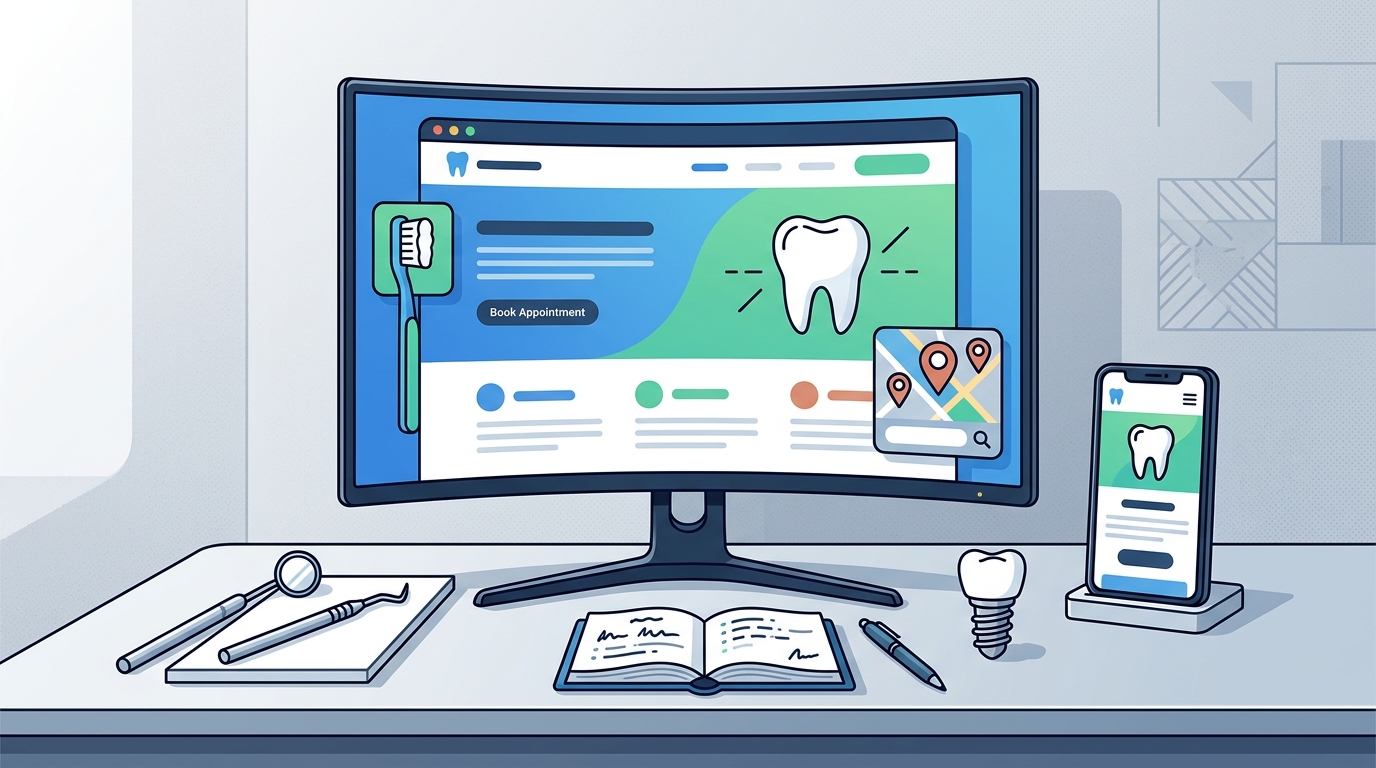
Choosing the right developer requires evaluating their technical stack, local SEO expertise, and business model. You need a partner who understands the specific challenges of the dental industry, such as appointment booking and patient intake. Adstonix builds custom websites for dental practices that include automated booking and lead notification systems, ensuring you never miss a call.
When interviewing developers, ask for examples of their work in the healthcare sector. Review their portfolio for speed, design quality, and local SEO performance. A reputable developer will be transparent about their process and willing to provide a clear scope of work. By focusing on these factors, you can select a partner who will build a website that drives real patient growth.
Key Takeaways
- Mobile speed is critical; aim for sub-1.0-second load times to retain high-intent patients.
- Local SEO requires structured data and service-area pages to rank in the Google 3-Pack.
- Web accessibility is a legal and ethical requirement for healthcare websites.
- Ensure you have 100% code ownership to avoid agency lock-in and monthly retainers.
- Look for developers who use modern frameworks like Next.js for performance and scalability.
- Automated booking and lead notification systems are essential for capturing patient inquiries.
Frequently Asked Questions
How long does it take to build a dental practice website?
A custom dental website typically takes 7 to 21 days to build, depending on the scope and complexity. Adstonix delivers projects within this timeframe, ensuring a fast launch without sacrificing quality.
Do I need a monthly retainer for my dental website?
No, you do not need a monthly retainer if you choose a developer who offers full code ownership. Adstonix provides one-time project pricing with zero monthly fees, allowing you to own your site outright.
What is the most important feature for a dental website?
The most important feature is mobile speed and local SEO. These factors determine whether your site loads quickly on phones and ranks in local search results, which are critical for patient acquisition.
Can I update my dental website myself?
Yes, if your developer provides a user-friendly content management system and full ownership. Adstonix builds sites with easy self-serve updates for photos, services, and hours, empowering you to manage your content.
How does a developer handle healthcare compliance?
A competent developer will ensure your website meets accessibility standards and uses secure hosting and encryption. They will also follow privacy best practices for any forms or data collection on the site.
What is the cost of a custom dental website?
Costs vary based on scope, but custom builds typically range from $1,450 to $4,950 or more. Adstonix offers transparent, milestone-based pricing with no hidden fees or monthly retainers.