

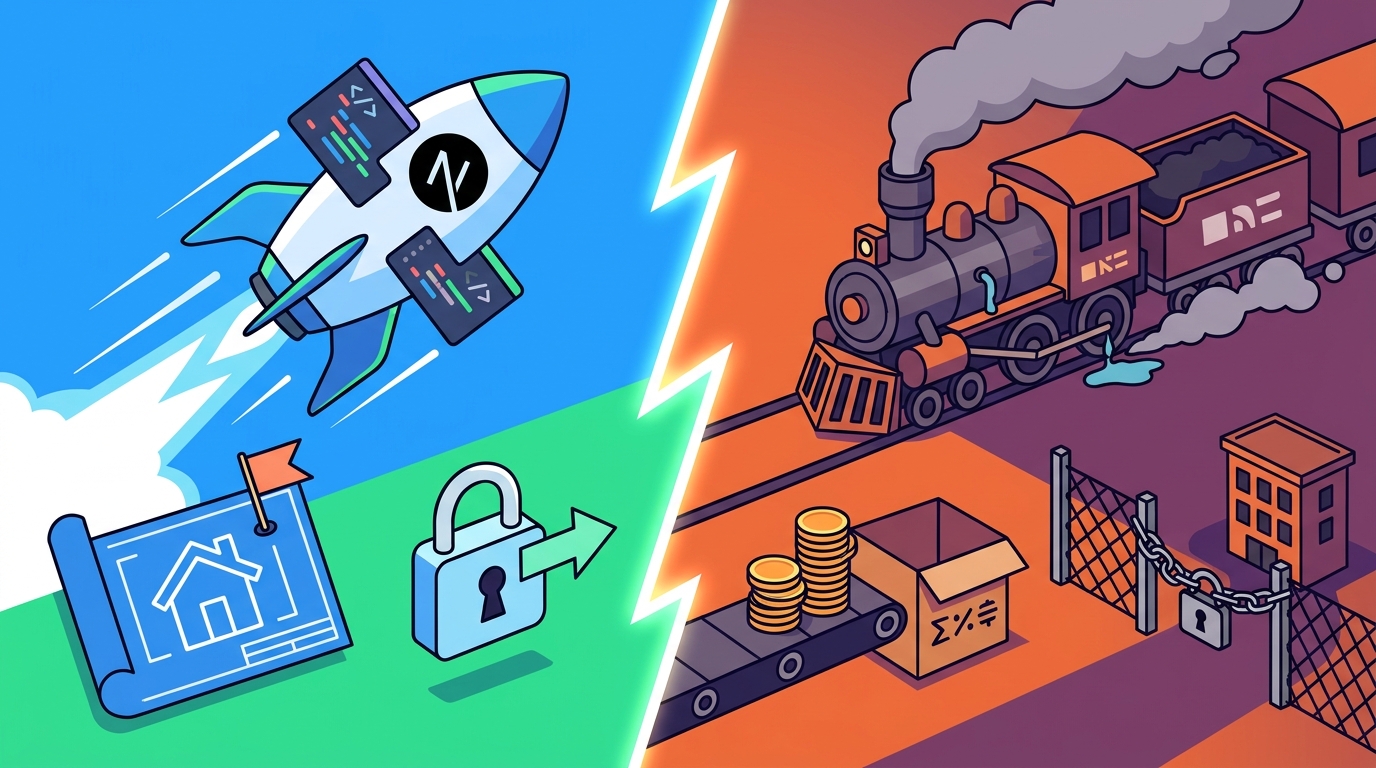
Next.js is the superior choice for local service businesses seeking fast websites without ongoing agency fees because it delivers sub-second mobile load times and allows for complete code ownership. Unlike traditional page builders that lock users into monthly retainers, Next.js enables a one-time investment model where the business permanently owns the digital asset. This approach eliminates the "hostage" economics of traditional agencies while ensuring high performance for local search rankings. according to Astro vs Next
Performance Architecture and Speed
Website speed is the primary driver of user retention for local service providers. A fast website is a technical structure that prioritizes server-side rendering and minimal JavaScript payloads to ensure content is visible to the user immediately. Traditional frameworks often rely on heavy client-side rendering, which forces the user's browser to download and execute large bundles of code before displaying a single word of text. This delay is critical because mobile users typically abandon a page if it does not load within three seconds.
Next.js addresses this bottleneck through its App Router and static generation capabilities. By pre-rendering pages at build time, the framework delivers HTML directly to the browser, resulting in a significantly faster First Contentful Paint. For a local contractor or dental practice, this means the phone number and booking form are visible instantly, even on slow cellular connections. This technical advantage is not just a metric; it is a direct conversion tool that captures high-intent searchers before they bounce to a competitor.
Ownership and Financial Economics
The financial model of web development is often misunderstood by small business owners. A retainer-based agency model is a recurring fee structure where the agency retains ownership of the code and domain, effectively renting the website to the client. This model creates a dependency where the business must pay monthly to maintain access to their own digital storefront. In contrast, a one-time investment model transfers full intellectual property rights to the client upon project completion.
Next.js is built on standard, open-source technologies like React and TypeScript, which are not proprietary to any single vendor. This standardization allows for a clean handover of the code repository and hosting credentials. When a business builds with Next.js, they are not locked into a specific agency's proprietary platform. They own the GitHub repository, the domain, and the hosting account. This ownership ensures that if the business decides to change developers or manage the site in-house, they can do so without paying a "release fee" or losing access to their digital assets.
Local SEO and Search Visibility
Local SEO is the practice of optimizing a website to appear in local search results, such as the Google Local 3-Pack. For service businesses, visibility in these results is the primary source of new customers. Search engines like Google prioritize websites that load quickly and provide a consistent user experience across devices. A slow, bloated website signals poor quality to search algorithms, resulting in lower rankings and fewer phone calls.
Next.js provides the technical foundation for high local SEO performance. Its ability to generate clean, semantic HTML and manage structured data efficiently helps search engines understand the business's services and service areas. By eliminating the "bloat" associated with page builders, Next.js sites often achieve higher Core Web Vitals scores. These scores are a direct ranking factor in Google's algorithm. For a business in Central Virginia, this means that a fast, well-structured site is more likely to rank for high-value keywords like "plumber in Richmond" or "dentist in Tri-Cities," driving organic traffic that does not require a monthly ad spend.
Maintenance and Long-Term Simplicity
Maintenance is the ongoing process of updating content, fixing bugs, and ensuring security for a live website. Many business owners assume that a custom website requires constant, expensive technical intervention. However, the complexity of a website is directly related to the number of moving parts in its architecture. Frameworks that rely on complex plugin ecosystems or proprietary page builders often introduce vulnerabilities and compatibility issues that require frequent, costly fixes.
Next.js favors simplicity and scalability by encouraging a clean, readable codebase with fewer dependencies. This architectural choice means that the website is more stable and easier to maintain over time. For a small business, this translates to lower long-term costs. Instead of paying a monthly retainer for "maintenance" that is actually just managing the complexity of a bloated platform, the business can make simple updates to text, photos, or hours of operation without technical assistance. This self-sufficiency is a key benefit of the one-time investment model, allowing the business to control its digital presence without ongoing financial obligations.
Key Takeaways
- Next.js delivers sub-second mobile load times, which is critical for converting local searchers into customers.
- Building with Next.js allows for 100% code ownership, eliminating the need for monthly agency retainers.
- Standard technologies like React and TypeScript ensure that the website is not locked into a proprietary vendor platform.
- High Core Web Vitals scores from a fast Next.js site improve local SEO rankings in the Google 3-Pack.
- A simpler, cleaner codebase reduces long-term maintenance costs and technical vulnerabilities.
- One-time investment models provide better long-term ROI for small businesses compared to recurring retainer fees.
Frequently Asked Questions
Does Next.js require a monthly hosting fee?
Yes, any website requires hosting, but Next.js can be hosted on standard, affordable platforms. The key difference is that you own the hosting account and the code, so you are not paying an agency a markup for access to your own site.
Can I update my Next.js website myself?
Yes. With proper documentation and a clean codebase, business owners can update text, images, and basic content without needing a developer. This self-sufficiency is a major advantage over proprietary page builders.
Is Next.js better than WordPress for local businesses?
For businesses prioritizing speed and ownership, Next.js is often superior. WordPress can be fast, but it often relies on plugins that add bloat and security risks. Next.js provides a more stable, high-performance foundation with full code ownership.
How long does it take to build a Next.js website?
A custom Next.js website for a local service business can typically be launched in 7 to 21 days, depending on the scope of the project. This is often faster than the ongoing, iterative process of retainer-based agency work.
What happens if I want to change developers later?
Because you own the code and the domain, you can hire any developer or agency to work on your site. There are no "release fees" or proprietary locks, giving you complete freedom to choose your technical partners.
Conclusion
Choosing the right framework is a strategic decision that impacts both performance and long-term financial health. Next.js offers the ideal balance of speed, SEO readiness, and ownership for local service businesses. By avoiding the retainer trap and investing in a fast, custom-built asset, you ensure that your digital presence works for you, not against you. Contact Adstonix to discuss how a one-time investment in a Next.js website can transform your local search visibility and customer acquisition.