

For businesses operating across multiple counties, the best approach is to create distinct, localized landing pages for each specific town or city rather than one broad county-level page. This strategy allows search engines to index your relevance to specific geographic micro-markets. Adstonix engineers these structures to ensure that local searchers in any part of your service radius find your business immediately, turning broad geographic coverage into precise local visibility.
The Case for Town-Level Granularity
Searchers rarely type broad county names when looking for urgent local services. Instead, they use specific city names or neighborhood identifiers. A service area page is a dedicated web page optimized to rank for a specific geographic location and service combination. When you operate across multiple counties, a single page covering an entire county often fails to rank for the smaller towns within that county. By building pages for individual towns, you capture high-intent traffic that broader pages miss. This granularity signals to search engines that you have a physical presence or active service capability in that specific area.
Avoiding Duplicate Content Penalties
A common mistake in multi-county operations is copying and pasting the same text across different location pages, changing only the city name. Search engines view this as thin or duplicate content, which can suppress your rankings. To avoid this, each page must contain unique, locally relevant information. This might include specific local landmarks, county-specific regulations, or unique challenges faced by residents in that area. Adstonix focuses on creating unique content angles for each location to ensure that every page provides distinct value to the user and the search engine crawler.
Aligning Web Pages with Google Business Profiles
Your website structure must align with your local search presence. Google Business Profile is the primary tool for local visibility, but it has limitations regarding how many service areas you can list. For multi-county operations, it is often more effective to have one primary Google Business Profile for your main office and use your website to cover the broader service area. The website pages then act as the authoritative source for your service capabilities in those specific towns. This separation of duties ensures that your local map pack presence remains strong while your website captures the long-tail search traffic for every town you serve.
Technical Architecture for Scalability
Managing dozens of location pages requires a robust technical foundation. Slow loading times or broken internal links can negate the SEO benefits of having many pages. Adstonix builds these sites using modern frameworks that ensure sub-second load times on mobile devices. This speed is critical because most local searches happen on mobile phones. A fast, mobile-first architecture ensures that users in any county can access your service details quickly, reducing bounce rates and improving conversion metrics.
Strategic Internal Linking Networks
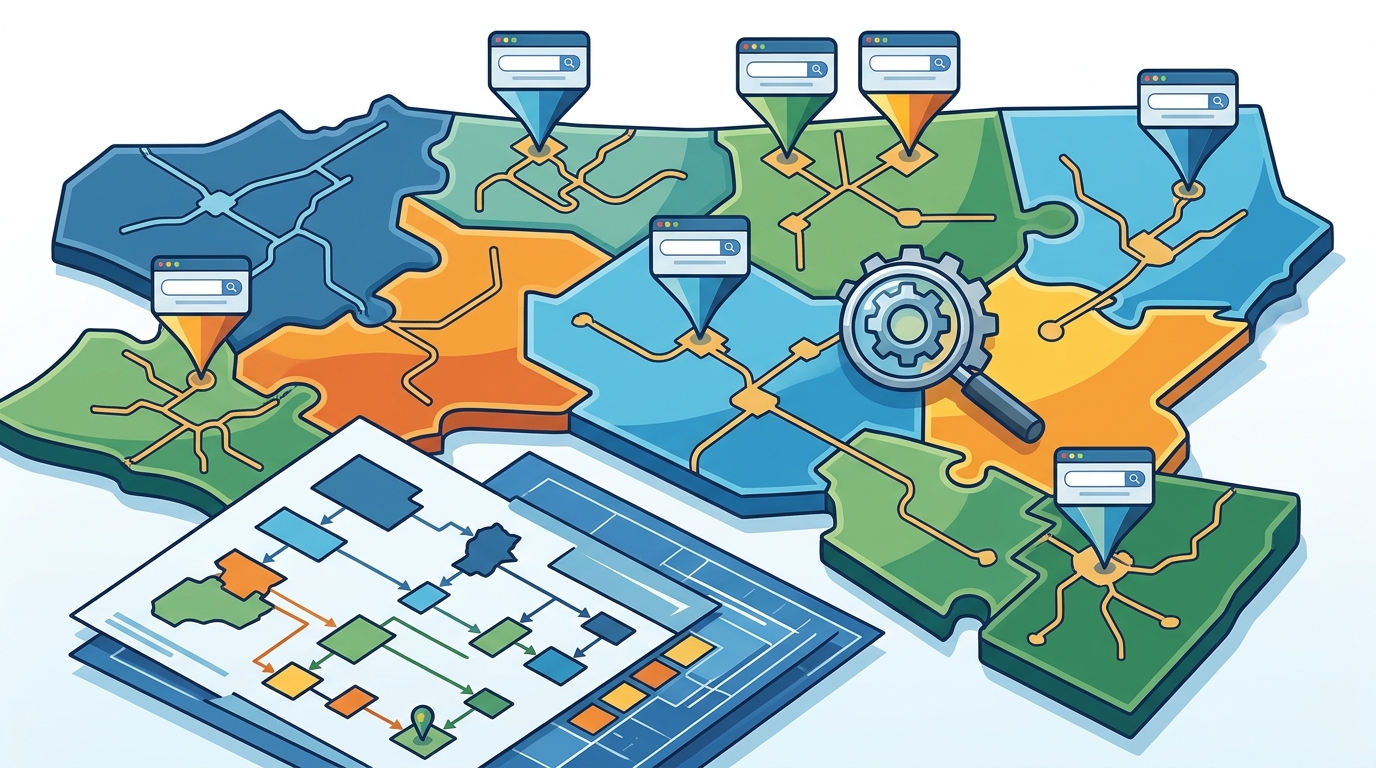
Internal linking is the backbone of a multi-county SEO strategy. You must create a logical network where your homepage links to major county hubs, and those hubs link to specific town pages. This structure helps search engines understand the hierarchy of your service areas. It also guides users to the most relevant page for their specific location. By implementing a clear internal linking strategy, you distribute authority across your site and ensure that no single town page is an orphan. This network effect strengthens your overall domain authority for local service keywords.
Key Takeaways
- Build town-level pages instead of broad county pages to capture specific local search intent.
- Ensure each location page has unique, locally relevant content to avoid duplicate content penalties.
- Align your website structure with your Google Business Profile strategy for maximum local visibility.
- Use a fast, mobile-first technical architecture to support a large number of location pages.
- Implement a hierarchical internal linking structure to distribute authority across your service areas.
- Monitor performance metrics for each town page to identify which locations drive the most revenue.
Frequently Asked Questions
How many service area pages should I create?
Create pages for every town or city where you actively provide services and have a realistic chance of ranking. Quality and relevance are more important than sheer quantity. Focus on towns with sufficient search volume and where you can provide unique local content.
Do I need a separate Google Business Profile for each town?
No, you should generally have one primary Google Business Profile for your main physical location. Use your website to cover the broader service area. Creating multiple profiles for the same business in different locations can lead to suspension by Google.
What if I do not have a physical office in every county?
You can still rank for service areas where you do not have a physical office. Your website pages should clearly state that you travel to or serve those areas. Ensure your Google Business Profile lists your service area accurately to match your website claims.
How do I write unique content for many towns?
Incorporate local specifics such as landmarks, local regulations, or unique community challenges. You can also highlight specific projects or testimonials from that area. This local flavor makes the content unique and valuable to residents of that specific town.
Can I use a template for all my service area pages?
You can use a consistent design template, but the text content must be unique for each page. Changing only the city name in a template is a common SEO mistake that can hurt your rankings. Each page needs its own distinct copy and local relevance.
Conclusion
Handling service area pages across multiple counties requires a balance of technical precision and local relevance. By focusing on town-level granularity, unique content, and strong internal linking, you can dominate local search results in every area you serve. Adstonix helps local businesses implement these strategies with custom, high-performance websites that turn geographic coverage into booked appointments. To discuss your multi-county SEO strategy, for a free consultation.